The Boy and the Bees
Çınar BİBER
- Category Children's Fairy Tales
- Format PDF
- Size 12.6 MB
- Added 30.10.2026
- Views 5
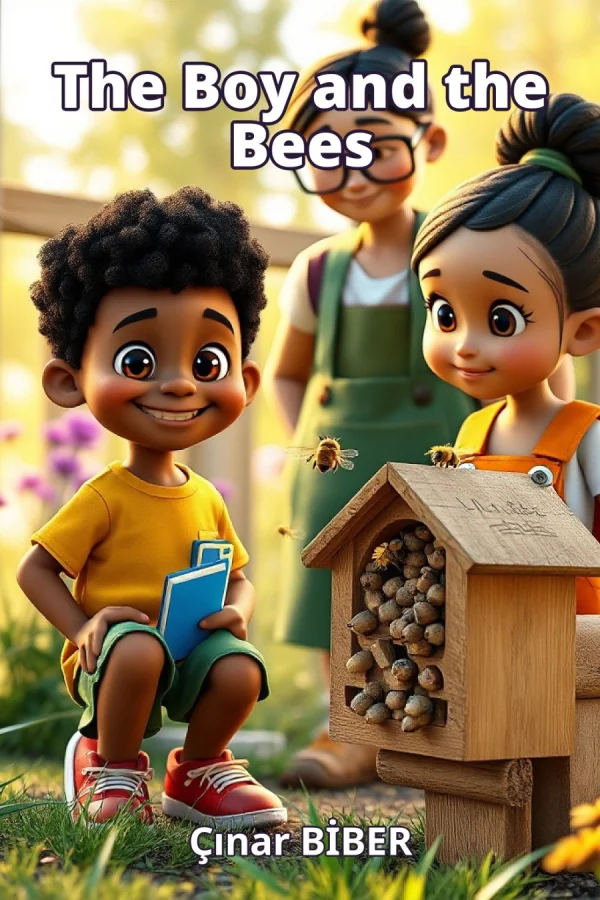
Leo loves the school garden, and every morning before class he kneels by the flowers with his blue notebook, drawing the bees that buzz from bloom to bloom. When he notices one small bee disappearing into a hole in a wooden post instead of flying to a hive, his teacher Ms. Lee explains that many native bees are solitary: they nest alone in hollow sticks or bare ground and serve as vital pollinators. Curious and determined, Leo wants to know where such bees can safely live.
With his friend Maya, who suggests collecting hollow sticks, and with help from Ms. Lee and their classmates, Leo sets out to build a bee hotel and a patch of bare soil in the garden. The children stack sticks into a wooden frame, tie it to a sunny fence, and dig the soil, then wait and watch. Day by day Leo records what he sees in his notebook, learning how solitary bees lay their eggs, seal their nests with mud, carry pollen, and dig tunnels of their own.
The story follows a patient, hands-on discovery of the small creatures that keep a garden growing. It shows young readers how observation, simple materials, and teamwork can create a safe habitat for pollinators, and it gently makes the point that even the smallest helpers can make a big difference. The book suits children in the early school years, parents and teachers looking for a calm nature story, and anyone who wants an inviting first introduction to native bees and the many forms pollinators take.
Read the Tale
If the PDF does not appear, open it in a new tab.
A Passage from the Tale
The Boy and the Bees Çınar BİBER
Leo loved the school garden. Every morning before class, he knelt by the flowers and watched the bees. They were tiny and fuzzy, buzzing from bloom to bloom. Some were amber, some were black, and some had rusty red stripes. Leo pulled out his blue notebook and drew them carefully. He wanted to know everything about these busy little creatures. 1
Ms. Lee, his teacher, wore a green gardening apron over her white blouse. She knelt beside Leo and smiled. "What have you noticed?" she asked. Leo pointed to a bee crawling into a small hole in a wooden post. "That bee isn't going to a hive," he said. "Where does it live?" Ms. Lee adjusted her glasses. "That's a native solitary bee," she said. 2
Ms. Lee explained that many native bees do not live in hives at all. They nest alone in tiny holes in wood or in bare ground. "They are important pollinators," she said. "Without them, many flowers and fruits would not grow." Leo wrote this in his notebook. He drew a little bee next to a hole. "So they need safe places to nest?" he asked. Ms. Lee nodded. 3
At recess, Leo told his friend Maya about the solitary bees. Maya was tall for her age, with her black hair in two puff buns. "We should build them a nesting spot!" she said. Her hazel eyes sparkled. "I can collect hollow sticks." Leo grinned, showing the gap in his teeth. "And I can dig the soil," he said. They ran to find Ms. Lee. 4
Ms. Lee clapped her hands. "What a wonderful idea!" she said. "We can make a bee hotel and a bare soil patch." She showed the class a picture of a bee hotel. It was a wooden frame filled with hollow sticks and twigs. "Solitary bees lay their eggs inside," she said. "Then they seal the ends with mud." The children were excited to help. 5
Maya brought her canvas bag and gathered hollow sticks from the garden shed. Leo dug a patch of bare soil with a small trowel. Other friends helped too. They stacked the sticks in a wooden frame and packed them tightly. Ms. Lee tied the frame to a sunny fence. "Bees love warmth," she said. "And they need mud to seal their nests." 6
Leo watched the nesting spot every day. He drew pictures of the tiny bees in his blue notebook. Some bees were no bigger than a grain of rice. They had fuzzy amber bodies and delicate wings. "They're so small," Leo whispered. "But they do such big work." Maya stood beside him. "Do you think they'll come?" she asked. Leo hoped they would. 7
One morning, Leo saw a bee hovering near the sticks. It landed on a hollow twig and crawled inside. Leo held his breath. Then another bee came. And another. They were moving in! Leo ran to tell Ms. Lee. "They found our hotel!" he shouted. Ms. Lee smiled. "Solitary bees are gentle," she said. "They won't sting unless they're scared." 8
Leo and Maya sat quietly by the nesting spot. They saw bees carrying yellow pollen on their legs. Some bees dug little holes in the bare soil. "Look!" Maya pointed. "That one is digging." Ms. Lee explained that ground-nesting bees need bare soil. "They make tunnels and lay their eggs there," she said. Leo drew a bee with pollen pants in his notebook. 9
The garden buzzed with happy bees. They flew from flower to flower, and the flowers bloomed brighter than ever. Leo noticed that the bees came in many shapes and sizes. Some were tiny and black, some were striped, and some were rusty red. "They're all different," he said. "But they all help the garden grow." Ms. Lee nodded. "Pollinators come in many forms." 10
One day, a bee landed on Leo's arm. He stayed very still. The bee rested for a moment, then flew away. "It tickled!" Leo laughed. Maya giggled. "You're a bee friend now." They watched the bees buzz around the flowers. Leo felt proud. He had helped make a safe home for these tiny helpers. And they were making the garden a better place. 11
Ms. Lee gave each child a small badge shaped like a bee. "You are all bee helpers," she said. Leo wore his badge on his mustard yellow t-shirt. He wrote in his notebook: "Solitary bees nest alone. They need hollow sticks and bare soil. They are important pollinators." He drew a picture of the bee hotel with bees flying all around it. 12
At the end of the school year, the garden was full of flowers and bees. Leo counted seven different kinds of bees. Some were as small as ants. Others were bigger and fuzzier. "Even small helpers can make a big difference," Ms. Lee said. Leo thought about his tiny bees. They worked hard every day, and now they had a safe place to live. 13
Leo brought his family to see the bee hotel. His little sister pointed at a bee. "Is it dangerous?" she asked. "No," Leo said. "They're gentle. They just want to build their nests and find flowers." He showed her the hollow sticks and the bare soil. "We made this for them," he said. "And they help our garden grow." 14
This is a preview taken from the tale (about 900 words). To continue, read the tale or download the PDF.
Tale Details
- Tale
- The Boy and the Bees
- Author
- Çınar BİBER
- Category
- Children's Fairy Tales
- Language
- English
- Format
- PDF · 12.6 MB
- Pages
- 18
- Words
- about 1,019
- Published
- Masalcı Baba · 30.10.2026
- Access
- Free to read and download; for personal use only, all rights belong to the author.
Frequently Asked Questions
Is the PDF of The Boy and the Bees free?
Yes. The Boy and the Bees can be read and downloaded for free on this site; no sign-up or payment is required.
How many pages is The Boy and the Bees?
The Boy and the Bees has 18 pages and about 1,019 words.
Where can I read The Boy and the Bees?
It opens inside your browser on phones, tablets and computers; you can also download the PDF and open it offline.
Who wrote The Boy and the Bees?
The author of The Boy and the Bees is Çınar BİBER; the tale is in the Children's Fairy Tales category.