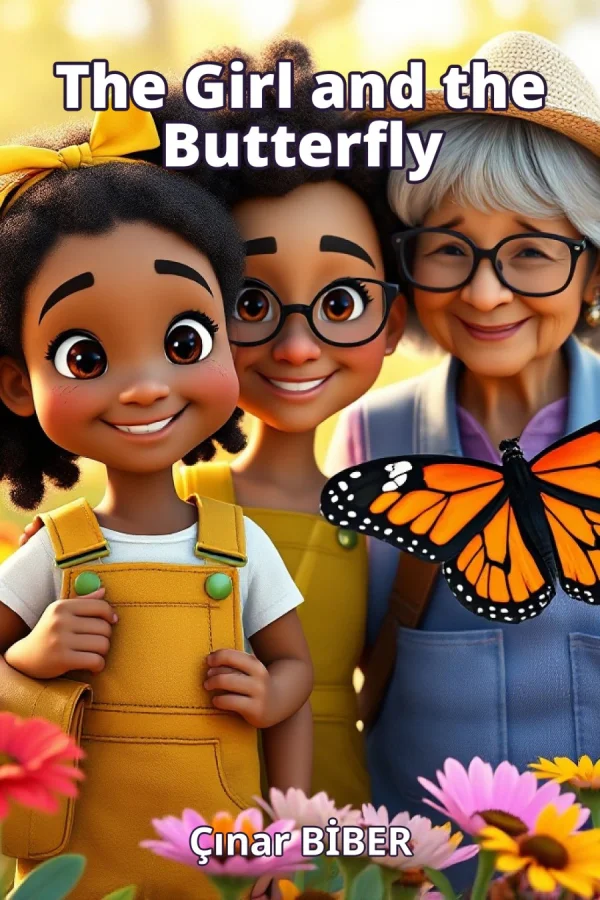
The Girl and the Butterfly
Çınar BİBER
- Category Children's Fairy Tales
- Format PDF
- Size 14.2 MB
- Added 30.10.2026
- Views 1
Eight-year-old Maya loves exploring her backyard with her nature journal and colored pencils. When she finds a patch of bare dirt, her grandmother Rosa suggests they plant a garden for butterflies. Together they choose native flowers—purple coneflowers, orange butterfly weed, and yellow black-eyed Susans—because these plants feed butterflies and give them a safe place to lay their eggs. Grandma Rosa teaches Maya that nature takes its time, so Maya waters the seedlings and records their growth day after day.
When the first orange bloom opens, a monarch butterfly lands on it, and Maya names him Pip. Through spring and summer she observes Pip and other butterflies, sketching them in her journal, noting which flowers they visit most, and learning how native plants and local butterflies help each other. A neighbor who grows only roses and never sees butterflies is surprised by what Maya explains, and Maya shares her collected seeds with friends at school so they can plant their own butterfly gardens.
The story follows a curious child learning patience, observation, and care for the natural world, guided by a gentle grandmother. It shows how small gardens can make a real difference and how knowledge shared with others can spread. Young readers interested in nature, gardening, and butterflies will find a warm, encouraging story about watching things grow.
Read the Tale
If the PDF does not appear, open it in a new tab.
A Passage from the Tale
The Girl and the Butterfly Çınar BİBER
Maya was eight years old, with warm brown skin and curly black hair in two puffs tied with yellow ribbons. She loved to explore her backyard with her nature journal and colored pencils. One sunny morning, she noticed a patch of bare dirt and said, "I want to grow something here." Her grandma Rosa, wearing her straw sun hat and blue gardening apron, smiled and said, "Let's plant a garden for butterflies." 1
Grandma Rosa showed Maya pictures of native flowers— purple coneflowers, orange butterfly weed, and yellow blackeyed Susans. "These plants grow well here and feed our butterfly friends," she explained. Maya's round dark brown eyes grew wide with wonder. "Butterflies need food?" she asked. "Yes, and a safe place to lay their eggs," Grandma Rosa said. "Native plants give them both." 2
Maya and Grandma Rosa dug small holes and planted tiny seedlings. Maya's green rubber boots got muddy, and her gaptoothed smile never faded. "Will butterflies really come?" Maya asked. "Be patient, little one," Grandma Rosa said gently. "Nature takes its time." Maya watered each seedling carefully, then drew a picture of the garden in her journal. 3
All through spring, Maya visited her garden every day. She watched the seedlings grow taller and greener. One morning, she spotted tiny buds on the butterfly weed. "Grandma Rosa, look!" she shouted. "Buds mean flowers are coming soon," Grandma Rosa said. Maya drew the buds in her journal, writing the date next to them. She couldn't wait for the first bloom. 4
Then one bright morning, the first orange flower opened. Maya gasped. "It's beautiful!" she whispered. A little later, a monarch butterfly fluttered down and landed right on the flower. Its bright orange wings had bold black veins and white spots along the edges. "You're the first one!" Maya said happily. She named the butterfly Pip and drew him carefully in her journal. 5
Pip the monarch became a regular visitor. He fluttered from flower to flower, sipping sweet nectar. Maya noticed how his delicate antennae waved as he flew. "Pip loves the butterfly weed best," she told Grandma Rosa. "That's because monarchs need it to survive," Grandma Rosa explained. "The mother butterfly lays her eggs on its leaves." Maya added a note to her journal with a yellow pencil. 6
Summer arrived, and the garden burst into color. Purple coneflowers nodded in the breeze, and yellow black-eyed Susans glowed like little suns. More butterflies came—painted ladies, swallowtails, and tiny blues. Maya drew each one in her journal, writing their names and the flowers they liked best. "So many wings!" she said, twirling in her green boots. 7
One afternoon, Maya saw Pip again. He landed on a purple coneflower and opened and closed his wings. "Welcome back, Pip!" she called. She sketched him with his wings spread wide. Grandma Rosa looked over her shoulder. "You're becoming a real butterfly scientist," she said. Maya beamed. "I want to know everything about them," she replied, her freckled nose crinkling with joy. 8
Maya noticed that the butterflies seemed to prefer certain flowers. She drew a chart in her journal, marking which flowers had the most visitors. "The purple ones are the busiest!" she told Grandma Rosa. "That's because native plants and local butterflies have grown up together," Grandma Rosa said. "They help each other." Maya nodded, understanding something important. 9
One day, a neighbor stopped by and admired the garden. "My garden is full of roses, but I never see butterflies," she said. Maya showed her the journal. "Native flowers feed them," Maya explained. The neighbor looked surprised. "I didn't know that," she said. "Maybe I'll plant some native flowers too." Maya felt proud that her little garden could teach others. 10
When fall came, the flowers turned to seeds. Maya collected them in small paper envelopes, just as Grandma Rosa showed her. "Seeds are like little promises," Grandma Rosa said. "Plant them, and next year more butterflies will come." Maya carefully labeled each envelope with the flower's name and a tiny drawing. Her satchel was full of nature's treasures. 11
Maya shared her seeds with friends at school. "These will grow flowers for butterflies," she told them. Her friends were excited to plant their own gardens. Maya drew a map of where each seed should go. "Small gardens make a big difference," she said, remembering Grandma Rosa's words. She felt warm inside, knowing she was helping nature. 12
Winter came, and the garden rested under a blanket of snow. Maya sat by the window, looking through her journal at all the butterflies she had drawn. She remembered Pip and all the others. "They're sleeping somewhere safe," Grandma Rosa said. "And your garden will wake up again in spring." Maya smiled, already planning next year's flowers. 13
In early spring, Maya saw the first green shoots pushing through the soil. She grabbed her journal and ran outside. "They're back!" she shouted. Grandma Rosa came to look, her hazel eyes twinkling. Together they watched the garden come alive again. Maya drew the tiny sprouts, writing "Spring!" in big letters. The cycle of seasons continued. 14
Then one day, a familiar orange shape fluttered into the garden. "Pip!" Maya cried. The monarch landed on a fresh butterfly weed flower, his wings bright in the sun. "You came back!" she whispered. She quickly sketched him in her journal, adding white spots to his wings. Grandma Rosa said, "He remembers your garden. It's his home." Maya felt a happy glow.
This is a preview taken from the tale (about 924 words). To continue, read the tale or download the PDF.
Tale Details
- Tale
- The Girl and the Butterfly
- Author
- Çınar BİBER
- Category
- Children's Fairy Tales
- Language
- English
- Format
- PDF · 14.2 MB
- Pages
- 18
- Words
- about 990
- Published
- Masalcı Baba · 30.10.2026
- Access
- Free to read and download; for personal use only, all rights belong to the author.
Frequently Asked Questions
Is the PDF of The Girl and the Butterfly free?
Yes. The Girl and the Butterfly can be read and downloaded for free on this site; no sign-up or payment is required.
How many pages is The Girl and the Butterfly?
The Girl and the Butterfly has 18 pages and about 990 words.
Where can I read The Girl and the Butterfly?
It opens inside your browser on phones, tablets and computers; you can also download the PDF and open it offline.
Who wrote The Girl and the Butterfly?
The author of The Girl and the Butterfly is Çınar BİBER; the tale is in the Children's Fairy Tales category.