The Little Walrus's Question
Çınar BİBER
- Category Children's Fairy Tales
- Format PDF
- Size 9.9 MB
- Added 30.10.2026
- Views 3
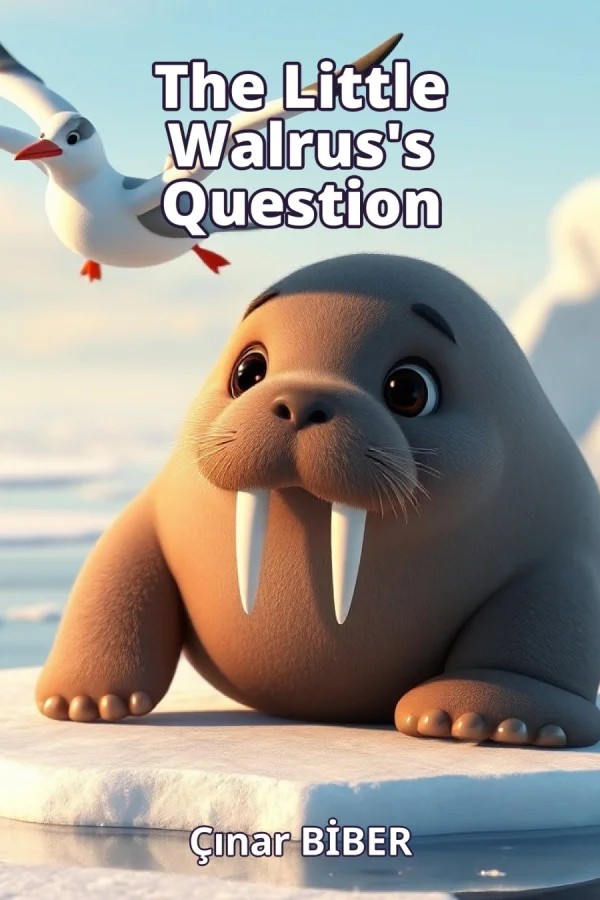
In the bright, cold Arctic, a little walrus named Wally lives on the edge of the sea ice. Each morning he flops onto a flat piece of ice and watches the world, and he notices that the ice beneath him never stays the same for long. One week it is thick and white and stretches far and wide; the next it turns slushy and thin near the edges, and his flippers slip. Puzzled, Wally asks his mother why the ice keeps changing, and she simply smiles and tells him to ask the tern.
Tilly the Arctic tern, a small bird with a black cap and a bright red beak who has flown all the way from the bottom of the world, lands nearby and takes Wally's question seriously. Through her explanations, Wally learns about the four seasons: winter, when the sea freezes into thick, strong ice; spring, when the sun climbs higher and the ice begins to melt at the edges; summer, when much of the ice breaks into floating pieces and the sea opens up for swimming; and autumn, when the days shorten and new ice forms again. When Wally asks why the seasons change at all, Tilly tells him about the Earth's tilt as it travels around the sun.
The two become season watchers, noticing the ice, the sky, and the animals, and every change tells them something new. When a younger walrus named Wanda asks Wally the very question he once asked, he proudly passes on what he has learned. The story shows young readers that asking questions is the best way to learn, and that knowledge shared with others keeps growing.
Read the Tale
If the PDF does not appear, open it in a new tab.
A Passage from the Tale
The Little Walrus's Question Çınar BİBER
In the bright, cold Arctic, a little walrus lived on the edge of the sea ice. His name was Wally. He had soft grey-brown skin, tiny white tusks, and big dark eyes. Every morning, he flopped onto a flat piece of ice and watched the world. The ice felt solid under his plump body, but Wally noticed it never stayed the same for long. 1
One day, the ice was thick and white, stretching far and wide. Wally could walk all the way to the big snowbank. The next week, the ice turned slushy and thin near the edges. Wally's flippers slipped a little. "Why does the ice keep changing?" he wondered aloud. He asked his mother, but she just smiled and said, "Ask the tern." 2
A small bird with a black cap and bright red beak landed on a piece of driftwood nearby. It was Tilly the Arctic tern, who had flown all the way from the bottom of the world. "Hello, little walrus," she chirped. "You look puzzled." Wally nodded. "The sea ice keeps changing," he said. "First it's hard, then it's soft. Why?" Tilly tilted her head. "That's a wonderful question!" 3
Tilly fluttered her grey and white wings and hovered just above Wally's nose. "The ice changes because of the seasons," she explained. "There are four of them: spring, summer, autumn, and winter. Each one brings different weather." Wally's eyes grew wide. "Four seasons?" he repeated. "What are they like?" Tilly landed on the ice beside him. "Let me show you," she said. 4
"In winter," Tilly began, "the sun hides low and the air turns very cold. The sea freezes into thick, strong ice. You can slide and play without it cracking." Wally remembered the chilly winds and the hard ice under his flippers. "I like winter!" he said. Tilly nodded. "But winter doesn't last forever. Soon, spring arrives." 5
"Spring is when the sun climbs higher and the days grow longer," Tilly said. "The ice starts to melt at the edges. Little pools of water form on top, and you can see your reflection." Wally thought of the slushy ice he had slipped on. "So that's spring!" he exclaimed. "The ice gets soft because it's warming up." Tilly clapped her wings. "Exactly! And then comes summer." 6
"Summer is the warmest season," Tilly said. "The sun shines almost all day and night. Much of the ice melts and breaks into floating pieces. The sea is open, and you can swim everywhere." Wally loved swimming. "I do like summer!" he said. "But where does the ice go?" Tilly pointed to the sparkling water. "It turns into water and joins the sea. Later, it will freeze again." 7
"After summer comes autumn," Tilly continued. "The days get shorter and the air turns crisp. The sea begins to freeze again, and new ice forms. The ice grows thicker and wider, just like the winter ice you know." Wally imagined the ice spreading out like a big white blanket. "So the ice comes back!" he said. "It always comes back." Tilly nodded. "Yes, the seasons go round and round." 8
Wally sat quietly for a moment, thinking about everything Tilly had told him. Then he asked, "But why do the seasons change?" Tilly smiled. "That's another great question! The Earth tilts as it travels around the sun. That tilt makes the sunlight change through the year." Wally didn't understand all of it, but he liked that Tilly always had an answer. 9
"Can we watch the seasons together?" Wally asked. "I'd like to see spring come again." Tilly fluttered up. "Of course! We can be season watchers. We'll notice the ice, the sky, and the animals. Every change tells us something new." Wally clapped his flippers. "I can't wait!" he said. "I'll ask more questions." Tilly chirped happily. 10
As the days passed, Wally became a careful observer. He watched the ice grow thin and then thick again. He saw the sun rise higher and then lower. He noticed birds flying north and then south. Each time he saw a change, he asked Tilly about it. And each time, Tilly explained with a story or a fun fact. 11
One day, a younger walrus named Wanda asked Wally, "Why does the ice keep changing?" Wally smiled, remembering his own question. "It's because of the seasons," he said. "The Earth tilts, and the sun's warmth changes. Would you like me to tell you about it?" Wanda nodded eagerly. Wally felt proud to share what he had learned. 12
Tilly watched from above and felt happy. She flew down and landed beside Wally. "You see," she said, "asking questions is the best way to learn. You asked, and now you can teach others." Wally's big dark eyes sparkled. "I'm glad I asked!" he said. "There's so much to know." Tilly nodded. "And you'll never run out of questions." 13
From that day on, Wally asked questions about everything: the wind, the waves, the stars, and the animals. Sometimes Tilly knew the answers, and sometimes they figured things out together. Wally learned that the world is full of wonders, and every question leads to a new discovery. 14
Wally and Tilly became the best of friends. They watched the seasons turn, year after year. Wally grew bigger, and his tusks grew longer, but he never stopped asking questions. And whenever a young walrus had a question, Wally was there to help, just like Tilly had helped him.
This is a preview taken from the tale (about 923 words). To continue, read the tale or download the PDF.
Tale Details
- Tale
- The Little Walrus's Question
- Author
- Çınar BİBER
- Category
- Children's Fairy Tales
- Language
- English
- Format
- PDF · 9.9 MB
- Pages
- 18
- Words
- about 975
- Published
- Masalcı Baba · 30.10.2026
- Access
- Free to read and download; for personal use only, all rights belong to the author.
Frequently Asked Questions
Is the PDF of The Little Walrus's Question free?
Yes. The Little Walrus's Question can be read and downloaded for free on this site; no sign-up or payment is required.
How many pages is The Little Walrus's Question?
The Little Walrus's Question has 18 pages and about 975 words.
Where can I read The Little Walrus's Question?
It opens inside your browser on phones, tablets and computers; you can also download the PDF and open it offline.
Who wrote The Little Walrus's Question?
The author of The Little Walrus's Question is Çınar BİBER; the tale is in the Children's Fairy Tales category.